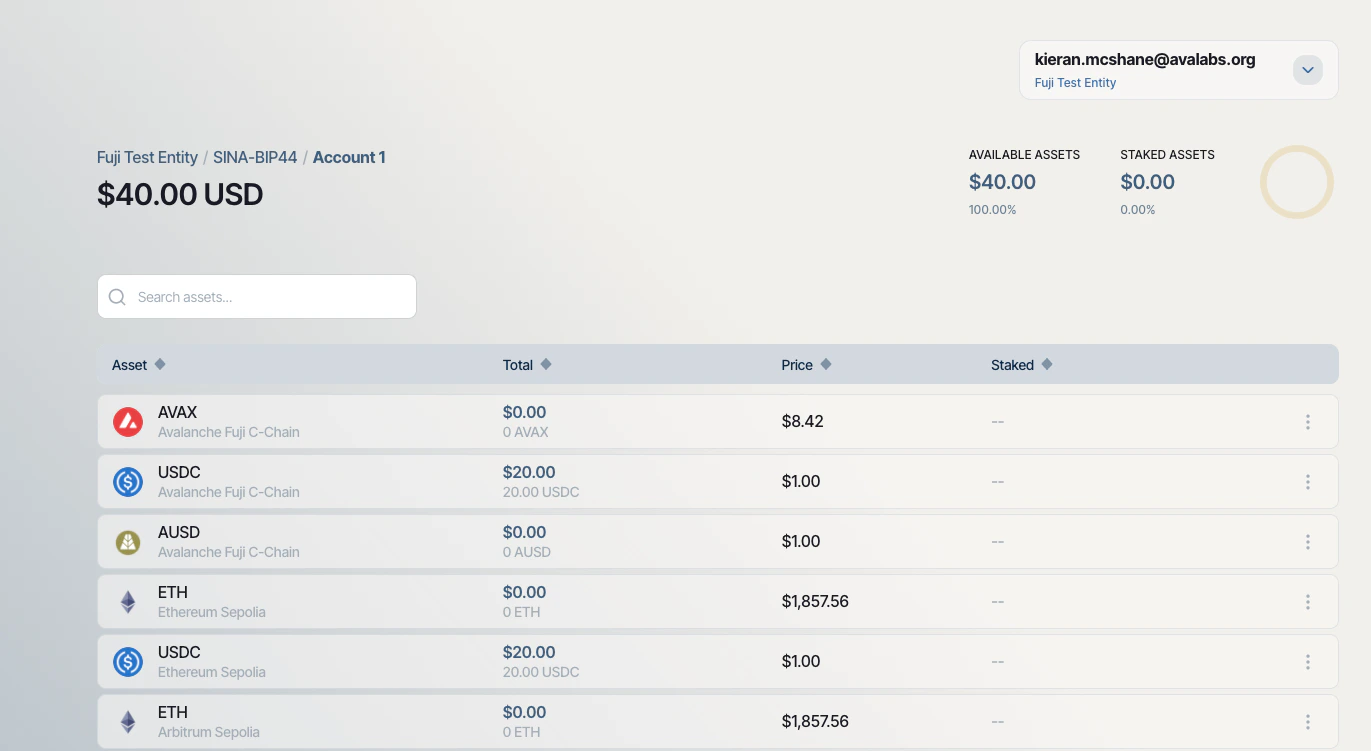

Company —> Entity —> Vault —> Account —> Address —> Assets
Company
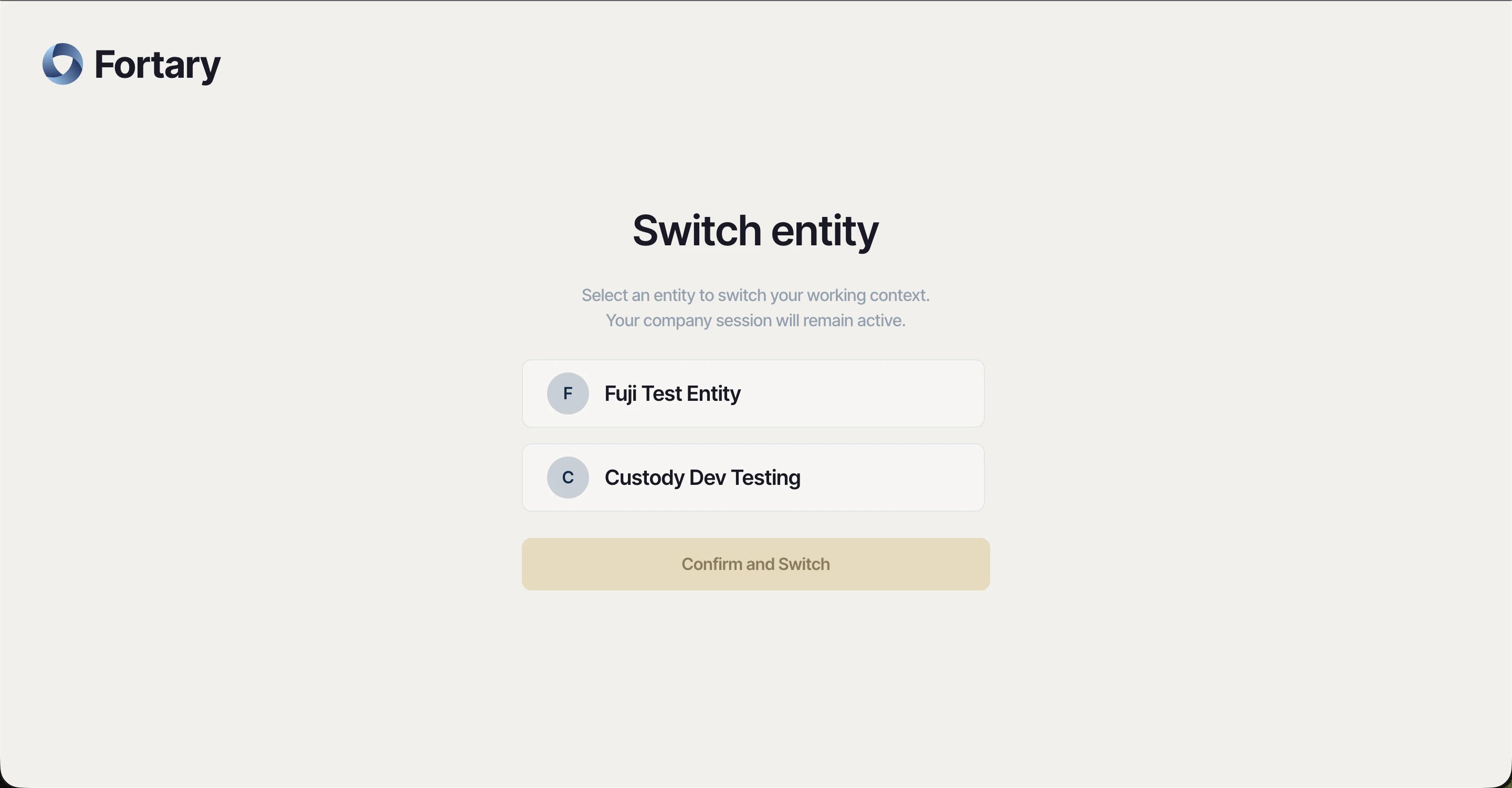
Your company is the the highest level of the hierarchy. Your specific user may be part of multiple companies but a company is contracted with Fortary with specific plans, usage goals, permissions, etc… From within a company a you can manage your multiple entitiesEntity
Individual separate buisiness units or customers within a company. Each entity has their own workspace. Each entity could have multiple vaults (aka wallet keys).- If you use Fortary for internal department or subsidiary management, this is how where you keep your many business entities separate.
- If you use Fortary to manage your own customers multiple wallets and want their workspaces seperated, this is how you can ensure individual segregation and organization of your customer funds.
Vault
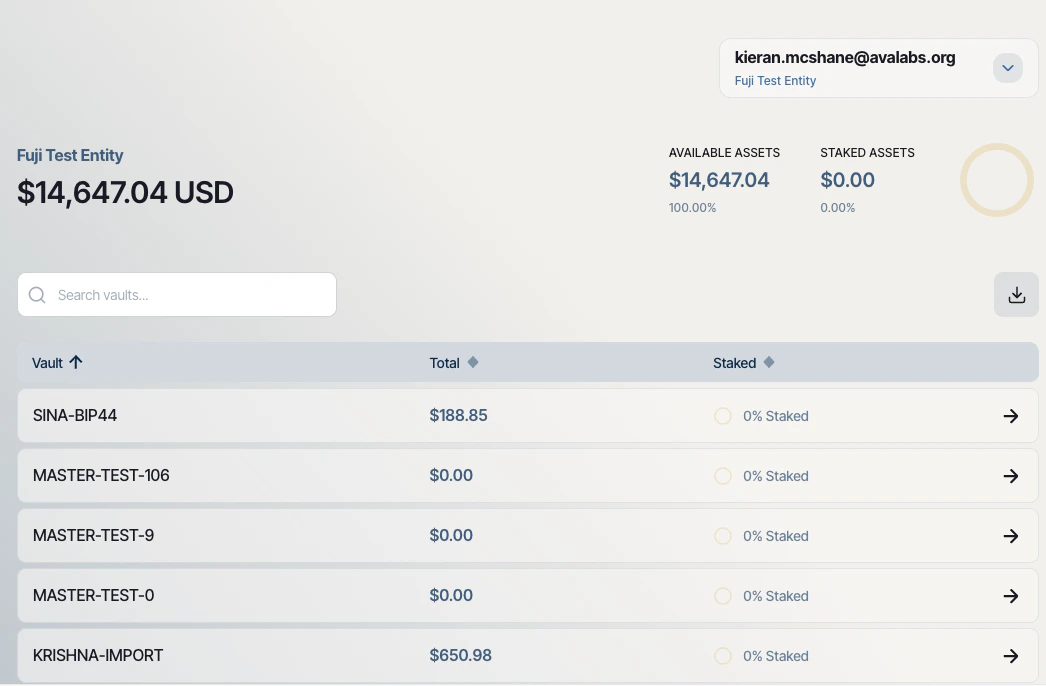
Within an entity, you can have multiple wallet keys. In Fortary, each separate wallet keys is known as a “Vault”. You can manage many vaults within an entity. Within an entity you can generate whole new Vault (aka wallet keys), import external wallets keys, or even have view only wallets being managed externally. This is the most important layer. Each Vault is truly a separate set of keys. You may distributed risk by putting assets across different accounts or different addresses. But if the Vault’s key’s are compromised the whole wallet is compromised. This is why the utmost security is set around the vaults themselves and most policy controls are set on the vault level.- If your organization has distributed risk across multiple sets of keys, this is an ideal way to manage those multiple vaults in the same workspace
- If you manage your own customer’s funds, each of your customers would have their own entity. And your customers may have multiple keys across multiple vaults. This allows your and your customer to view and manage those multiple vaults in one workspace.
Accounts
If you’re familar with your everyday crypto wallets, you’ll understand inside of a vault (wallet keys) you could have multiple accounts. This is a great way segregate the management of your assets into separate keys. Depending on your wallet configuration (newly generated or imported) Fortary leverages hard derivation paths when segregating accounts. Meaning there is no database managing your account structure. This allows you to scale your keys infinitely if you need to deploy any form of automation or obfuscation across thousands of accounts or addresses. This organization of accounts is not dependent on Fortary. If Fortary the company dissolves, you can take your keys to any other wallet in the market and your assets will always be organized this way.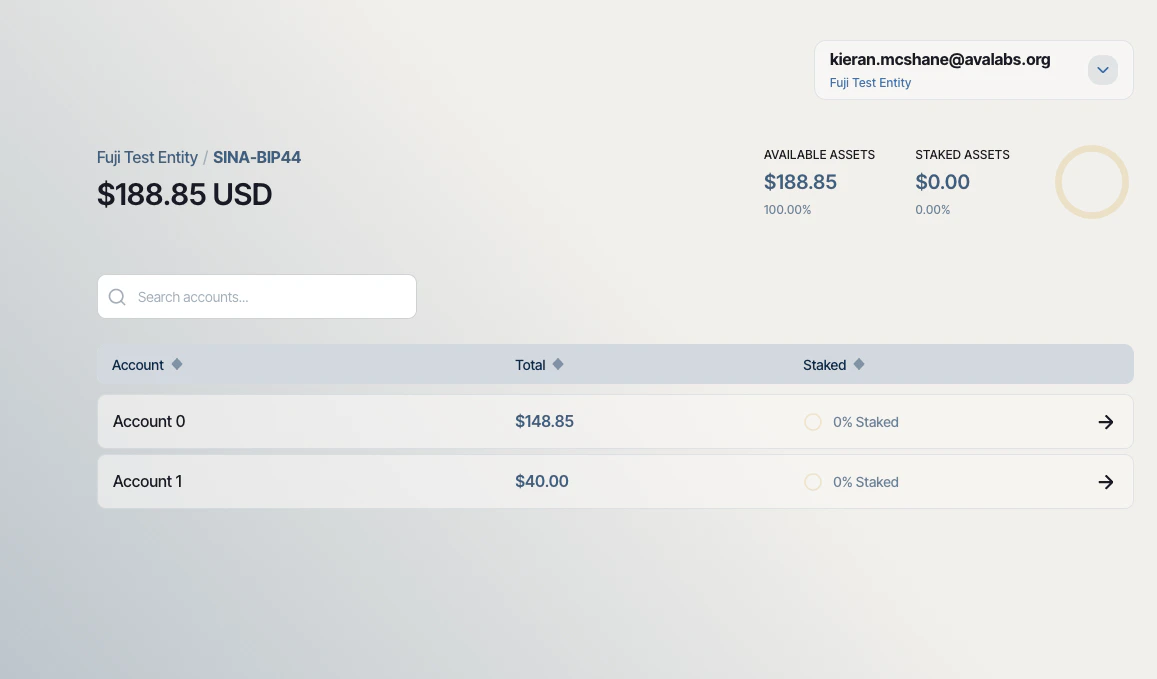
Assets And Addresses
Inside an individual account, you can now manage your individual assets. You can monitor you balance balance and value of each asset. As well as generate the deposit addresses for each asset to send assets to this account.ADDITIONALLY, for some networks we support generating many deposit addresses (soon to be supported for all networks). Being able to create new and unused deposit addresses in the same account is a useful functionality when handling massive transaction throughput. This helps individuals infinitely scale in address usage for extremely complex and automated transaction and address management. It also helps obfuscate their holdings and blacklist a compromised address without blacklisting a whole account or keys. In the UI we display assets on top of addresses, for simplicities purposes, but structurally addresses are above assets in the hierarhcy.